


04 · Digital
LED SCREENS & VIDEO WALLS
Light strong enough to compete with daylight.
- Discipline
- Digital
- Covers
- Boardroom, training and conference video walls · Reception and lobby feature screens · Cinema and F&B concourse column wraps
- Why it matters
- Pitch matched to viewing distance
Introduction
An LED screen is not a large television. It is a grid of modular cabinets, and almost every decision that matters — pixel pitch, brightness, cabinet depth, power draw, service access — is made before a single tile is hung.
Get the pitch wrong and the content breaks up at the distance people actually stand. Get the brightness wrong and it disappears under a skylight. We size both against the room, then build the structure the cabinets hang on.
Applications
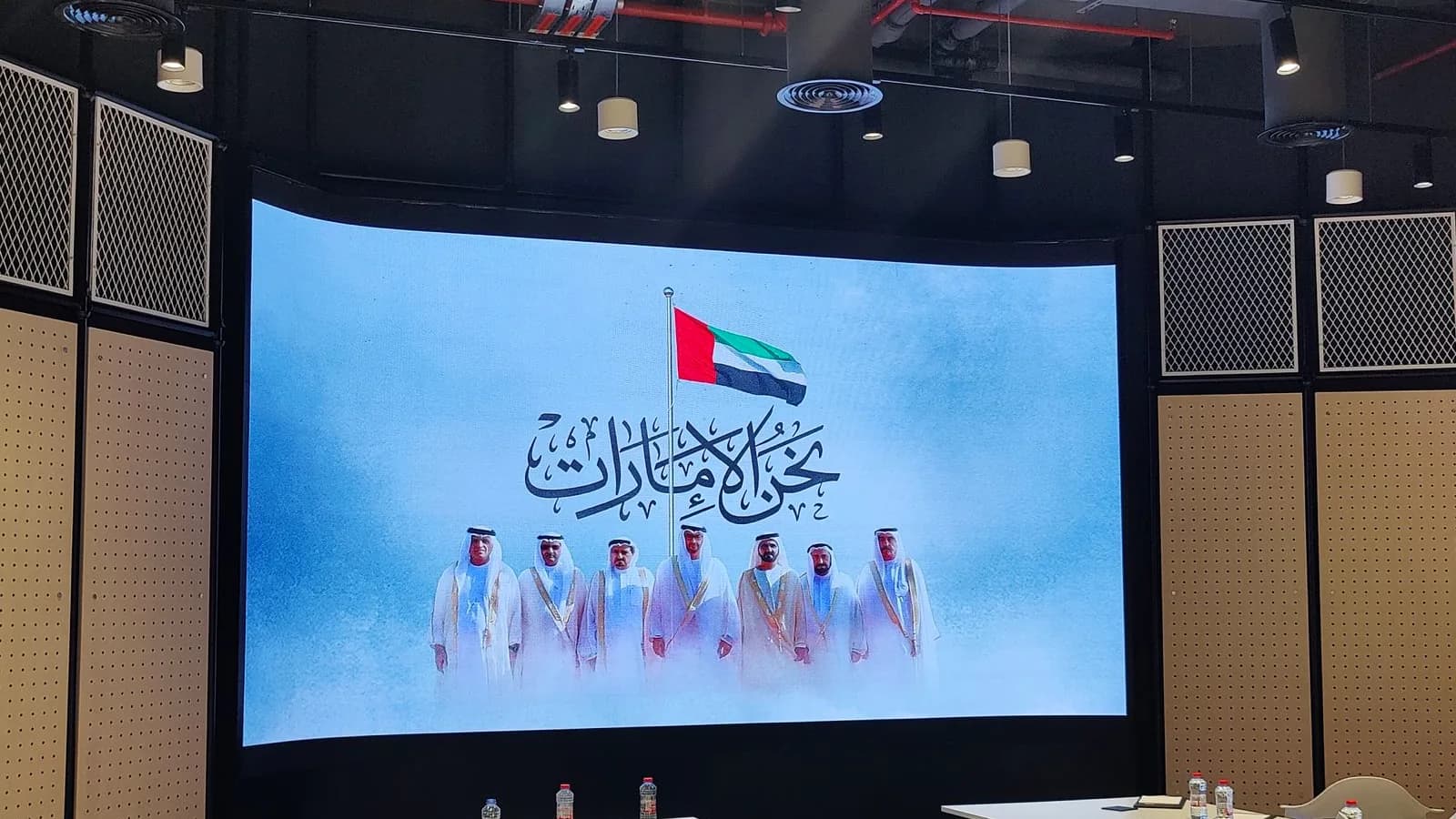
- Boardroom, training and conference video walls
- Reception and lobby feature screens
- Cinema and F&B concourse column wraps
- Retail promotional and window LED
- Curved and custom-shaped installations
- Outdoor high-brightness facade screens
- Event stage backdrops and activation screens
Why it matters
WHAT YOU GET
THAT YOU WOULD MISS.
- 01
Pitch matched to viewing distance
Pixel pitch is selected from how close the nearest viewer actually stands, so the image resolves as a picture rather than a grid of dots.
- 02
Brightness that survives the room
Nit levels specified against the real ambient conditions — a skylit concourse and a blacked-out boardroom are opposite problems.
- 03
Serviceable tile by tile
Modular cabinets with front or rear access mean a failed module is a swap, not a rebuild of the whole wall.
- 04
Built to the room geometry
Curved, wrapped and multi-faced installations are engineered around the actual column or wall rather than forced flat.
Materials & technology
SPECIFIED, NOT DEFAULTED.
- Fine-pitch indoor cabinets
- Close-viewing interiors where the audience sits within a few metres of the surface.
- High-brightness outdoor
- IP-rated cabinets and drivers specified for direct sun and the thermal load of an unshaded elevation.
- Curved and column cabinets
- Segmented cabinets that wrap a column or follow a radius without visible faceting.
- Processing and control
- Video processors, redundancy and the content path, so the wall keeps running once we hand it over.
How we work
FIVE STAGES, EVERY TIME.
Project visuals


Common questions
What is the difference between this and digital signage?
Digital signage generally means commercial LCD panels and totems — a single sealed unit you mount and plug in. LED is a different category: a grid of modular cabinets, and almost every decision that matters — pixel pitch, brightness, cabinet depth, power draw, service access — is made before a single tile is hung, not built into a fixed product bought off a shelf. That's also what makes LED far brighter and able to be built to any size or shape, which is why it works on facades, columns and large walls where an LCD panel physically can't scale. The other practical difference is servicing: LED cabinets are modular with front or rear access, so a failed module is a tile swap rather than replacing the whole screen, which isn't how a sealed LCD panel works.
What pixel pitch do we need?
It comes from viewing distance, not from a spec sheet default. A boardroom where people sit two metres away needs a much finer pitch than a concourse column read from fifteen, because pixel pitch determines the distance at which individual pixels stop being visible and the image resolves as a picture instead of a grid of dots. Get it wrong in either direction and it's a real problem: too fine a pitch for the distance wastes money on resolution nobody can see, and too coarse a pitch for a close-viewing room means the image never resolves properly no matter how good the content is. We size pitch at survey against the actual nearest viewing position for that specific installation, rather than quoting a standard pitch and hoping the room works around it.
Can an LED screen follow a curve or wrap a column?
Yes. Segmented cabinets can wrap a column on all faces or follow a radius, which is how concourse and lobby feature installations are usually built rather than forced flat against a surface that isn't flat. The cabinets are engineered around the actual column or wall geometry rather than the installation being adapted to fit a standard flat panel, and the segmentation is detailed so the wrap reads as one continuous curved surface without visible faceting at the joins between cabinets. This is decided at the same stage as pixel pitch and brightness — against the specific room and structure, not as an add-on option — since a curved installation has different structural and viewing-distance considerations than a flat wall would.
Related work

HAVE A SPACE
THAT NEEDS
SIGNAGE?
Tell us what you're building. We'll help you make it impossible to miss — and impossible to get lost.